Understanding Resistors: Overview
Learn about different types of resistors and their applications
💡What is a Resistor?
A resistor is a passive electrical component that limits or regulates the flow of electrical current in a circuit, or simply put, it's a poor conductor of electricity. It's one of the most fundamental and commonly used components in electronics.
💧 Analogy: Resistor as a Stone in a River
Just like a stone in a river blocks and slows down the water flow, a resistor restricts the flow of electrical current in a circuit.
💡 Key Point: The bigger the stone (or higher the resistance), the more it blocks the flow. In electronics, we measure this resistance in Ohms (Ω).

SVG file by brgfx
Types of Resistors
Resistors come in many different forms, each designed for specific applications and mounting methods. Here are the most common types:
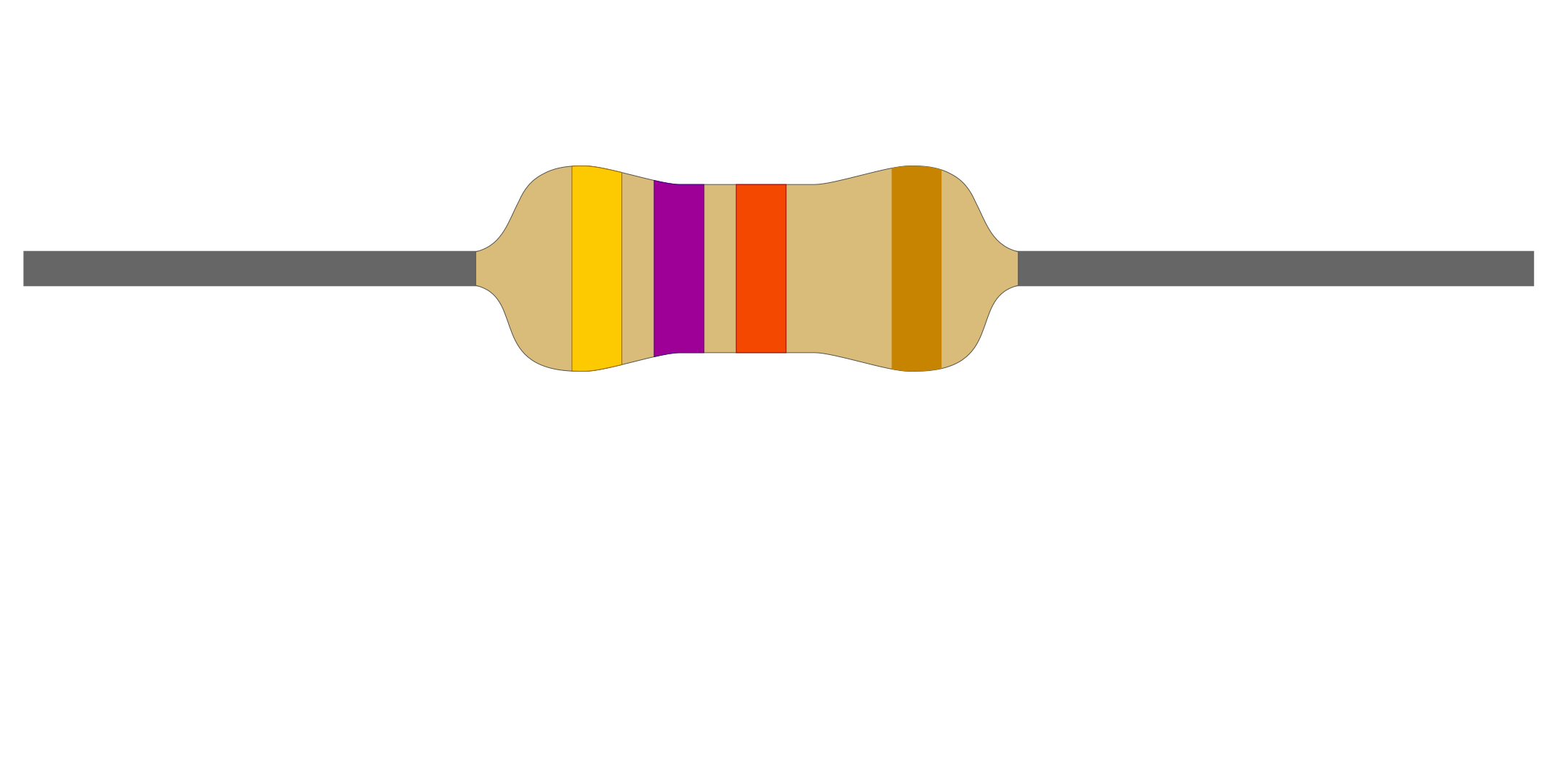
Axial (Through-Hole) Resistors
The most common type of resistor with wire leads extending from both ends. They use color bands to indicate their resistance value and are perfect for breadboards and through-hole PCBs.

SMD/SMT Resistors
Surface Mount Device resistors are tiny rectangular components designed for automated assembly. They're used in modern electronics where space is limited.

Variable Resistors (Potentiometers)
Adjustable resistors that allow you to change the resistance value manually. Commonly used for volume controls, dimmer switches, and sensor calibration.
Other Types
Photoresistors (light-dependent), thermistors (temperature-dependent), and specialty resistors for specific applications.
Image credits: Axial resistor by OpenClipart, SMD resistor by Lubko Tor, Potentiometer by OpenClipart
💡Key Characteristics
- ✓Measured in Ohms (Ω) - named after physicist Georg Ohm
- ✓Used to control current flow and protect components
- ✓Come in various types: through-hole, surface-mount, and variable
- ✓Most resistors are non-polarized (work in any direction)

Did You Know?
The human body acts like a giant resistor! Your body's resistance typically ranges from 1,000 to 100,000 Ohms depending on factors like skin moisture, contact area, and pathway through the body. This is why dry skin provides better protection from electric shock than wet skin - dry skin has much higher resistance. Your internal body resistance (from hand to hand through your torso) is actually fairly constant at around 500 Ohms, but your skin adds the variable resistance that can protect you.
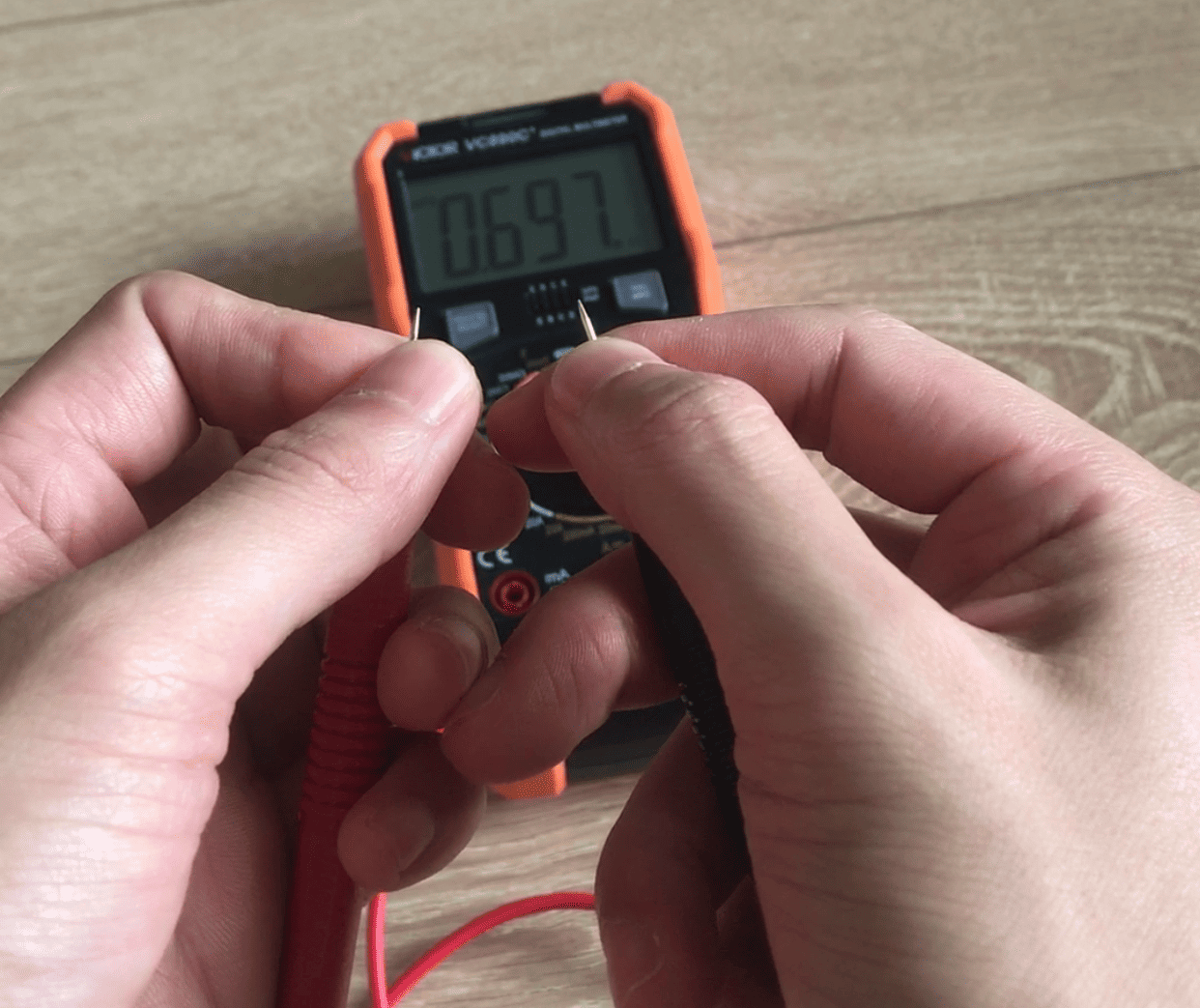
Measuring human body resistance using a multimeter. The resistance varies depending on skin moisture and contact pressure.